Not All Superheroes Wear Capes

capesWonder Woman.  Spider-man.  Incredible Hulk.  Which superhero was your favorite growing up?  We are all familiar with this story line:  the dreaded Joker tries to take over the world…..but not on Batman’s watch.  Batman steps in to save the day – throwing all the right punches, driving a fancy batmobile and always including his awesome sidekick, Robin.  His bravery, courage and leadership are admired by all.

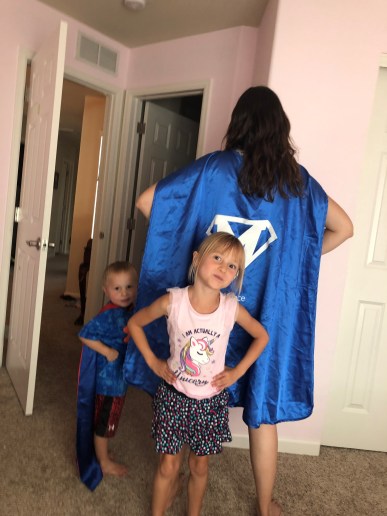
Each day I do my best to fit in 30 minutes of good old fashion play time with my children.  Tuesday night it was time to morph into Superheroes.  We put on our capes and saved the world 10x in a matter of minutes.  The play time got me thinking about the real crusaders in the world.  Those change agents that are impacting business and impacting lives.  I’d like to take a few minutes to highlight stories I’ve recently witnessed where “ordinary” people are doing “extraordinary” things to positively impact our world – and you’ll notice none of them wear capes.

Business Change Agents

Once you get a taste of what good looks like, you can’t help but sink your teeth into it and commit 100%.  Go all in.  Take the time needed to do it right.  A friend once told me there are two ways to do things.  You can either 1) take the time to do it right or 2) do it again.  Who has the time to do it again – especially if we know how to do it right the first time, even if it requires more upfront leg-work?  Hardly anyone.  Although I must admit, there are times I can be quite impatient and shortcuts are appealing.  Especially when it comes to generating new business at work.  When I know an idea is destined to be a homerun, it can be challenging to wait-it-out and let the results happen….even if it takes 6-9 months to produce.

This week I was reminded how important it is to have patience when working on demand generation campaigns.  A colleague on our team was awarded a B2B Innovation award for her effort and results on an account based marketing program.  The program took several months to yield initial results, but has since served as the poster-child of inspiration for developing similar programs.  The high-roller making this idea a reality is a super star that deserves a superhero cape.  Her willingness to plan, create and execute – and then be patient, makes her a change agent we can all continue to learn from.  Give her a cape.

Educators Sharpening the Minds of Our Future

My middle child started kindergarten this month {insert a big boo-hoo here}.  While she has been enrolled in pre-school and daycare previously, all-day learning is something new and unfamiliar to her.  Learning how to take control of her choices was one of the first lessons taught in her class last week.  She came home with “self-control” bubbles and couldn’t wait to show me what they meant or symbolized.  Mrs. B put together a memorable learning exercise that is beginning to teach 5-year old’s how they are in the driver seat and as a result are in control of their body, brain and choices.  The world can use more self-control and owning up to the choices we make — and for that I see superhero traits all around this kindergarten teacher making a difference in my daughter’s life and the lives of 18 other littles.   Give her a cape.

Being married to an educator I tend to follow many educators on Twitter.  If you are ever in need of true inspiration for a quick pick-me-up, start following teachers on Twitter.  Mrs. L shared her class constitution that was written and amended by her 5th grade students.  “We the People of Mrs. L’s class, in order to form a more successful classroom, establish trust, ensure respect, promote positivity, and ensure that we love our passengers, do ordain and agree to this constitution.”  The constitution goes on to include four Articles outlining their commitment to one another.  If teaching our future leaders about the importance of respect and being positive isn’t worthy of a cape, I’m not sure what is.  I responded to her tweet with a comment around how lovely it is to see her incorporating core values into her classroom and gaining buy-in, when I see many businesses attempt this with little success.  Giver her a cape.

Working Parents and Stay at Home Parents

Have you ever seen someone move from the board room to the ball field in a matter of hours?  It is quite impressive.  I once saw a father/executive secure a deal that made the team hit quota all while adding a renewed sense of confidence and loyalty amongst the team.  Shortly after closing the deal he hustled out the door to coach his son’s little league game.  He has his priorities in check.  He loves what he does in the boardroom and equally, or likely more, loves bringing leadership and teamwork values to the ball field. Leading by example both professionally and personally is worthy of a cape.

If you’ve never seen a stay-at-home-mom (SAHM) in full swing, you are missing out on a huge learning opportunity.  Some of my inner tribe have chosen to pause their careers and be a SAHM.  Juggling a household, multiple schedules (that often compete with something), cleaning, feeding…..and the list goes on – is no easy feat.  My husband and I both work and we tag team nearly everything.  When either of us is traveling solo, it ain’t easy doing the single parent thing.  But how do so many of my SAHM friends make it look so easy?  They are organized.  They are fearless.  They get sh*t done.  They are excellent negotiators (getting those kids to down that broccoli takes serious negotiation skills at times).  Don’t let those yoga pants and razorback t’s fool you – I guarantee a cape is hidden in their hall closet.

My son’s favorite superhero is Spidey and this quote is something each crusader, I have the pleasure of knowing, lives and breathes – whether they realize it or not.  “WHEN THE MOB AND THE PRESS AND THE WHOLE WORLD TELL YOU TO MOVE, YOUR JOB IS TO PLANT YOURSELF LIKE A TREE BESIDE THE RIVER OF TRUTH, AND TELL THE WHOLE WORLD: ‘NO. YOU MOVE.’” —AMAZING SPIDER-MAN




One size fits all: great for hats, bad for marketing.

dino

Earlier this week I was helping my son with his math homework.  Subtraction.  What I am about to share might shock some of you.  In the spirit of being completely transparent…..I still count on my fingers.   Always have and always will.  While showing off my mathematics finger trick, it became obvious it just wasn’t sinking in for him.  He was getting frustrated and I was getting desperate to get this homework completed.  Our kitchen table was covered in Jurassic Park Legos minus the tiny area cleared for homework.  As a mean (and ugly) Tyrannosaurs Rex was staring me down, it sparked an idea.  Maybe he is a visual learner.  It was worth exploring so I lined up the dinosaurs.  I asked him, “If you have twelve dinosaurs and take away three, how many are left?”  He pulled three dinos out of the line-up and quickly shouted out “NINE.”  Score one for mom as he gained a renewed sense of excitement for math and I could move on to preparing dinner.  The visual technique worked and we breezed through the homework.  One size fits all: great for hats, bad for learning.

If you practice a One size fits all approach in your sales and marketing efforts, you will get frustrated rather quickly and likely not succeed.  Twenty-first century buyers have varying product needs, expect research to be available at their fingertips and learn in different ways.  What do I mean by learn in different ways? Some require videos to absorb research, others prefer reading blogs and many prefer documented statistics on an infographic to help advance them through the buying process.  Understanding their needs and how they absorb information is what separates good marketers/sellers from the great.

Buyer behavior is the driving force behind the purchasing process. The sooner marketers uncover how buyers learn and what content they consume at each step of the buying cycle— the faster they can apply this information to improve engagement models or go-to-market plan(s).  I have an example that will make this clearer.

Last year we took a closer look at our email nurture tracks.  We found engagement rates (open and click thrus) to be super low.  Upon further research, it was discovered the content served was not always relevant to the buyer’s current need, coupled with always serving up the same type of actions (whitepapers) — could be the reason(s) for lower engagement figures.  By tailoring our messages with a vertical specific theme and mixing up the type of assets served – one track produced triple engagement results compared to prior tracks.  Blogs and eBooks were consumed the most in the learning and research stages.  Serving up more personalized content that included a healthy mix of varying marketing pieces drove the buyers to engage with us more and we learned more about their buying behaviors.  This resulted in higher engagement rates and more meetings to fill our pipeline.

In my non-scientific approach of testing the visual, dinosaur mathematics method with my son, I quickly understood how he learned.  I could adjust my technique to engage with him in a way that accelerated the completion of his homework.  Buyers are really not that different than a 7-year-old, once you determine their learning style and adjust your programs, positive results follow.  The morale of this blog is simple, One size fits all:  great for hats, bad for marketing.

Supermarket Shopping and Sales Pipeline – a lesson on patience

cartWhile grocery shopping on a Saturday, with two of my children, I quickly lost count of the number of impatient shoppers.  I’m sure it wasn’t the best parenting move to allow both of them to have their own mini-shopping cart…in a semi-crowded supermarket…just before a Winter storm was about to hit.  But they wanted to help and I encourage independence.   We had only been shopping about 3 minutes before the sighs of irritated shoppers became painfully obvious.  For example, when my daughter’s wheel went wonky and the woman picking out potato chips next to her gave me a look of “my goodness, get her out of my way.” I stared her down with the biggest smile – she still wasn’t happy – even though it took a mere 4 seconds to get the wheel back on track.  We picked up the pace and moved on.

All in all, we had a productive morning.  As a special treat, I took my littles to the McDonalds drive-thru (don’t judge, all things in moderation – including fast-food).  Our food was delivered in record-time and I pulled forward to hand out drinks.  I did not notice I hadn’t pulled up far enough until the guy behind me laid on his horn, threw his arms up and started shouting “get out of the way, lady.”  Seriously, it was a matter of seconds and we’d be on our way and OUT OF HIS WAY.  His lack of patience was mind-boggling.  Even worse was when I saw a very young child riding shot-gun with him, witnessing this bad behavior.  Surrounded by many adults with impatient behavior, it got me thinking about what triggers us to reach a point of annoyance that leads us down a path of impatience.

The psychology of patience tells us, “impatience is mainly a person’s inability to withstand a certain irritating emotion.”  A few examples of what causes a trigger leading to irritating emotions could be:  running late when we are in a hurry, not seeing results as quickly as we’d like or experiencing a different outcome then originally expected.

I like to think I am a patient person.  With three littles 6 years old and under, most days I have no choice but to channel my inner zen and not sweat the little things (but I am not perfect and I do sweat some things).  Where I find myself being the most impatient is when it takes longer than expected to show results.  Whether those results are potty-training my youngest little or launching a new marketing campaign.  Both examples, despite being extremely different situations, trigger an irritating emotion of not experiencing the outcome I want – more quickly.

This week at work I was reminded and encouraged about the importance of being patient and not losing sight of the positive momentum we are building to deliver results the business requires.  A colleague shared, “Our brains are wired to want to succeed and sometimes sabotage us when we don’t. It’s up to us to keep our minds right when we aren’t getting the desired outcomes.  Stay the course, work the plan and remember the initial, positive outcomes and how we got them.”  How encouraging is that?  After he shared that with the broader team, our sales pipeline spiked by nearly a third.  A timely reminder of the importance of being patient and keeping it positive.

A few of my employees had performance reviews due this week.  While compiling data to enter successes, I received yet another reminder on the importance of being patient.  In the middle of 2018 the team applied an Account Based Marketing strategy to a demand generation campaign for a niche group of higher education institutions.  That campaign has generated a 1:40 ROI when you look at the net new logo pipeline it has generated.  Wonderful results that didn’t happen overnight.  The team stayed the course, worked the plan and celebrated mini-milestones until that fabulous ROI appeared.

What have I learned this week from my supermarket experience with littles to seeing sales pipeline numbers spike?  We need to encourage ourselves and those around us to stay the course and avoid situations that trigger frustrating emotions. How do you avoid frustration from creeping in?  Do a quick measurement: is your WIN count ahead of your loss count? My children really wanted to help grocery shop and driving their own cart meant they had to be alert (WIN) and avoid interrupting other patrons shopping experience (WIN) – despite irritating some (Loss).  I encouraged them along the way and they learned a lesson on independence and awareness (WIN).  Reviewing the weekly pipeline results and a single-campaign that is well on its way to breaking a company-wide ROI record (WIN) keeps me in a positive state of mind that progress is happening and that good things do come to those who wait.

#Patience #Leadership #Sales #WorkingMom #DemandGeneration

Call Your Parents More, It’s Good for Them and You

momdadpicv2I recently returned from a Midwest holiday road trip.  When you live over a thousand miles away from family, you quickly learn to cherish every face-to-face minute you get. Despite having just driven through four states to reach my parent’s house, on Christmas Eve I volunteered to tag along with my father as he made the 90-minute trek to pick up my brother (he was flying in from Florida).   We talked about the weather, jobs, past family vacations…. even made a pit stop at a local sporting goods store we would frequent together when I was a kid, it was quality 1:1 time.  My heart was full. It was such a wonderful time that I started questioning why I do not talk to him more regularly.  Same with my mom.  I used to call them every day. But as my career advanced and family expanded, finding time to make a call {regularly} has been tricky.  How pathetic does that sound?  Tricky, seriously!? Sure, we text and keep in touch thanks to social media but there is something special about hearing a parent’s voice – it is calming, comforting.

A study from the University of Wisconsin-Madison’s Child Emotion Lab says that even just hearing your mother’s voice over the phone can have the same stress-reducing effects of a hug.  Knowing this, for those of us fortunate to still have parents around, why don’t we call more often?

It is hard to believe I’ve been working in hi-tech for over a decade. Tack on that my roles have been in sales and marketing where lead goals, pipeline goals & revenue goals can be compared to riding a fast moving roller coaster ride with lots of twists and turns – to say my stress levels are high, is an understatement.   All good of course.  I heart sales and marketing, but let’s be real, it is an emotional career where you experience incredible highs and intense challenges.

My first taste of working in hi-tech was for a software start up in Tampa.  I would work 65 hours (easy) a week.  I had a good 45-minute commute and would call my parents at least once a day either to or from work.  Some that have a long commute might decompress by listening to podcasts or music.  Not me, I would decompress by sharing my day with my parents and the advice they gave was invaluable.   While I don’t miss the commute, I certainly miss those regular conversations.

A few years ago, my husband introduced me to best-selling author Jon Gordon.  Gordon has authored many motivational books on the power of positivity.  He is also known for encouraging people to select #oneword at the start of a New Year.  The concept behind choosing “one-word” is to select a word you can incorporate into your daily activities to help drive inspiration to reach both professional and personal goals.  In 2018, I chose Driven and this year I selected Create.

There are so many things I want to Create in 2019.  Create another well-oiled team that excels at pipeline creation (which we are off to a great start).  Create more time to focus on maintaining a positive physical health state.  Create more time for my family.

I am thankful we decided to pack up our party of five and head east to spend the holiday with family.  The encouraging conversations I had during that week were just what I needed to kick-start the New Year in high gear!  Creating more time for family, and that includes ma and pa, is a top priority for me.  And now that I know a published study shows how positive the effects can be by hearing your mom’s voice…..I can’t wait to get back into the habit of decompressing with my parents, having more family dinners with my littles/husband and killing our team’s pipeline goals.  Happy New Year and cheers to a healthy, prosperous 2019!


Shaping The B2B Buying Experience One Broccoli Experiment At A Time

broccoliAccording to a series of experiments by Princeton psychologists Janine Willis and Alexander Todorov, it takes a tenth of a second to form an opinion of a stranger’s face.
W-O-W.  We judge people quickly, or at least their appearances.

I will not attempt to blog about opinions formed around people and their beauty levels (phew!), but it did surface [a lot] while researching topics on forming opinions.  I’ll stick to what I know best – shaping b2b buyer opinions of marketing ads.  There are three tough critics I use as guinea pigs to sharpen my opinion shaping skills:  my littles, ranging in age from 6 to 2.

When selling my littles on how delightful and oh-so-tasty green vegetables are, I quickly discovered I have approximately 5 seconds to convince them. And in those 5 seconds I better nail my pitch – there are no second chances.  For example, saying “It’s time to eat broccoli and chicken for dinner” doesn’t influence their opinions in the least.  I get groans of all kinds and nose wrinkles.  BUT, experience tells me to position it more like this, “You need big muscles to play outside.  Eat your broccoli and you’ll have more energy to play 15 more minutes.”  Whether we like it or not, we live in a what’s in it for me world.  We know in a matter of 7 seconds (or less) if what is being presented will help us get what we need.  I like to think that my re-spin on eating greens is somewhat getting them to understand the benefits of eating healthy.  When they eat healthy it allows for more time to do what they love the most – play outside.

In business, you’ll often hear marketers talk about an “outside look in” versus an “inside look out” approach. What’s the difference?  When you look outside first, you’re putting your opinions/beliefs on hold and instead choosing to listen to the needs of your audience.  Listening to feedback gathered from the voice of your customer and letting it guide your go-to market messages is a good summary of embracing outside-in.  When you answer the what’s in it for me question in your marketing messages, you begin earning trust and credibility – two attributes that lead to success.

Elisabeth Lagerstedt is a retired CEO from Inquentia Group that understands the importance of answering what’s in it for me.  She shares a few questions you can ask yourself to evaluate whether your organization leans more towards an outside-in approach.

1) Do you know what your targeted customer segments are, what needs and behaviors they have, how to best solve their relevant problems and what kind of value you provide them?

2)  Is there a strong fit between your target segments’ needs, your value proposition, your overall business model, internal processes and a customer-oriented organizational culture, with focus on creating value for your customers? And do you feel that it is a fundamental necessity of running a successful business?

We have less than 7 seconds to shape the opinion of buyers and make an impactful impression.  Understanding what motivates your audience by turning up your listening ears (a phrase I use with my littles all the time) is what has helped increase click and conversion rates in my marketing efforts. If positioning a statement to be more outside looking in gets my kiddos to eat their greens because that will get them more energy to play outside – why would the same concept not apply in business to buyers?  They need “x” to deliver “x” results that fulfills a need to make their jobs easier and yield greater success for the business.